



主题: Optimizing Distorted Utility under Moment Constraints
中文题目:矩约束下的扭曲效用函数的优化问题
时间: 2026年1月27日 上午 9:30-10:30
地点: 管理科研楼一楼 第一教室
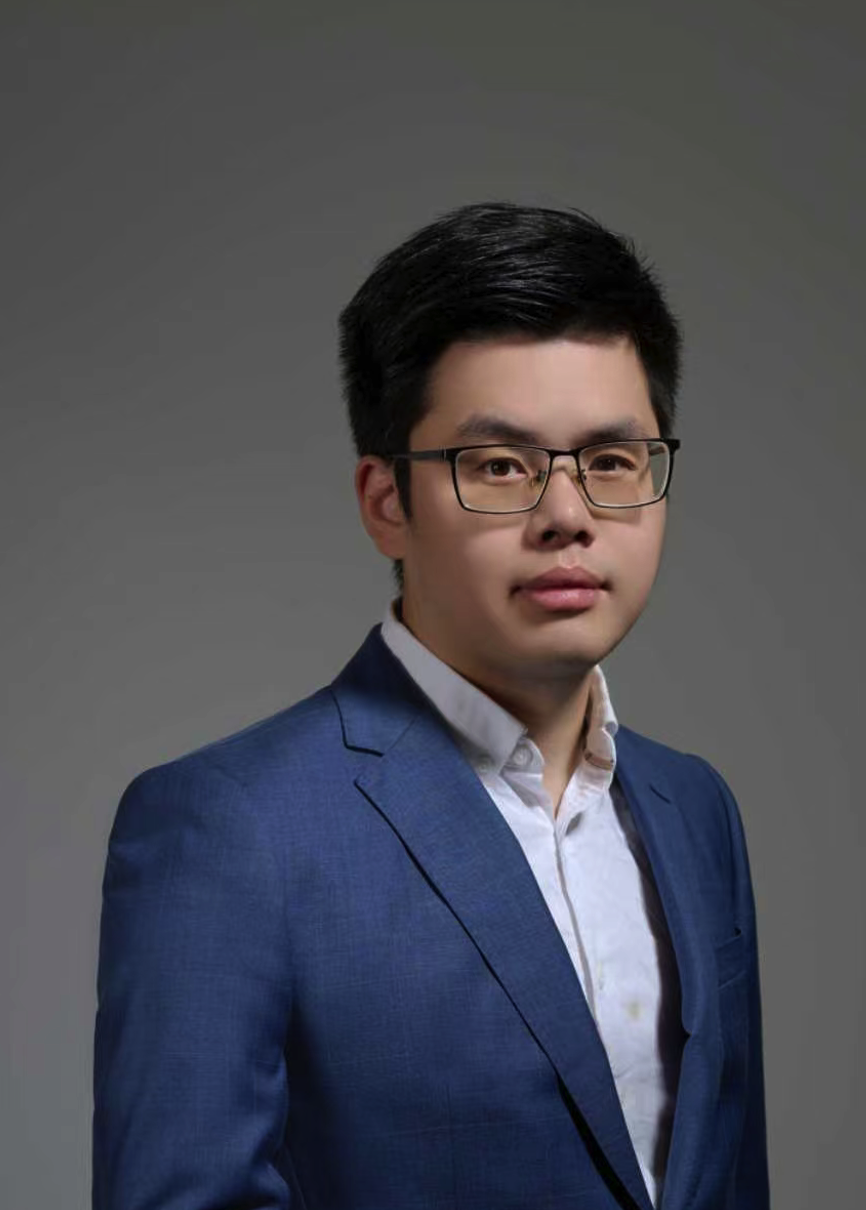
主讲人: Dr. Hui Shao Assistant Professor, International Business School, Zhejiang University
Bio: Shao Hui, Assistant Professor at the International Business School, Zhejiang University; PhD in Applied Mathematics from Peking University. Previously worked as Assistant Researcher and Postdoctoral Researcher at the Center for Quantitative Finance and the Risk Management Institute at the National University of Singapore. His research focuses on the interdisciplinary applications of artificial intelligence and applied probability theory in financial engineering, with particular emphasis on the optimization of risk measures, portfolio selection, and the pricing of credit derivatives and other derivatives.
Abstract: We study how to optimize a “distorted utility” functional with nonconvex and nonsmooth utility functions and general nonlinear and nonconvex distortion functions under moment constraints. Instead of working with distributions directly, we switch to their quantile functions and pose the problem as a constrained functional optimization problem with monotonicity and moment constraints. Using Clarke’s nonsmooth calculus, we derive exact first-order optimality conditions under very mild assumptions. The monotonicity requirement is handled constructively via isotonic projection, which turns the abstract order constraint into an explicit and computable operation. This leads to a unified variational characterization and closed-form solutions for extreme-case distorted utilities under moment information. We establish the existence and uniqueness of optimizers, and we also identify regimes in which the supremum is not attained, providing a clear variational explanation for nonattainment phenomena in tail-focused problems. Building on the optimality conditions, we develop a solution strategy for deriving closed-form solutions and extend classical results such as the Scarf bound.